
In any flourishing garden, the presence of insects is inevitable. While some insects provide essential benefits—such as pollination and natural pest control—others like aphids, cutworms and thrips pose a serious threat to the wellbeing of flowers, vegetables and fruit. These harmful insects can cause significant damage by feeding on plant tissues, leading to reduced growth and lower yields. To maintain the health and productivity of your garden, it is crucial to effectively manage these pests. Using the right pesticide allows gardeners to control infestations efficiently, safeguarding plants with measures designed to minimise environmental impact.
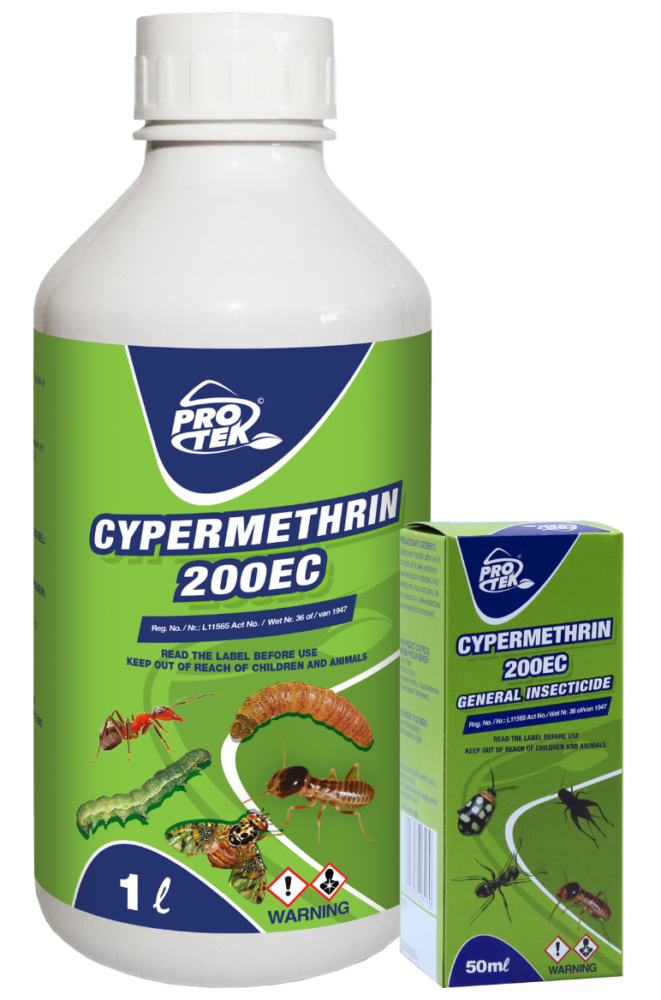 Cypermethrin is a versatile concentrate contact and stomach insecticide, ideal for the protection of your garden against a large range of insects like African bollworms, American bollworms, thrips, flower beetles, bollworms, diamondback moth larvae, lawn caterpillars, weevils, lesser armyworms, crickets, lily borers, lucerne caterpillars, ants, aphids, red bollworms, spiny bollworms, stink bugs, stalk borers, harvester termites, mealybugs and whiteflies.
It works by disrupting the nervous system of insects, causing death upon contact or ingestion. It is valued for its rapid action and effectiveness against adult pests and larvae, helping maintain the health and productivity of your garden. Cypermethrin is extensively used in the formal agricultural sector, as well as subsistence farming due to its wide range of insect control. The African bollworm is a significant pest affecting nearly all cultivated crops, including cotton, maize, fruits, vegetables and ornamental flowers. The adult moths are nocturnal and highly mobile, laying their eggs over large areas. The larval stage of their lifecycle inflicts the most damage by tunnelling into fruits and flowers, leading to considerable yield losses and reduced crop quality. This damage can also increase the plant’s susceptibility to other diseases as well.
The American bollworm is a major crop pest that damages maize, cotton, tomatoes, citrus and other vegetables. Its larvae feed on flowers, buds and fruit, reducing yields. Infestations peak in warm months as moths lay eggs on host plants, with caterpillars quickly burrowing into fruit or cobs, making control more difficult.
Red bollworm moths are active at night. The female adult lays eggs on or near flowering plants. The larvae feed on flowers, causing severe damage and affecting the yields, especially on cotton and maize crops. They also attack grapevines, deciduous fruit and citrus.
Spiny bollworms typically attack cotton balls, but also feed on cotton flower buds, shoots and flowers leading to reduced yields and quality of cotton. Moths are most active at dusk and dawn. Female moths lay large batches of eggs and the resulting young larvae feed prolifically on the growing tips and buds. When attacking blooms, they may open prematurely and remain fruitless. Some damaged bolls fall off, while others remain on the plant and are characterised by circular holes bored into the fruit. These serve as entry points for secondary infections by fungi and bacteria, leading to the rotting of fruit.
Stainers are also a serious pest found in cotton crops, feeding on cotton seeds and emerging bolls when ripening, transmitting cotton-staining fungi in the process. They can damage fruits and ornamentals, especially malvaceous plants such as hibiscus found commonly found in many home gardens.
The lesser armyworm is a pest that thrives on a variety of field and flower crops, as well as vegetables. The name “armyworm” originates from the behaviour of its larvae, which “march” in large groups away from areas where their food supply has been depleted. This can result in extensive infestations, with vast portions of lawns, pastures, or grass crops such as maize being covered in dense colonies of larvae. The most severe outbreaks typically occur following late summer rainfall and after periods of drought, when the conditions favour rapid population growth and movement of these pests.
Weevils are slender or oval shaped beetles and are known for their extended snouts. They are active at night, sheltering in dark places during the day. Weevils live in almost all environments and are attracted to moisture, making their way into homes when the weather is hot and dry. They damage stored food products like grains and seeds. If weevils infest a garden or field, they can damage plants and reduce crop yields. They bore into stems, bulbs and grain where they feed or lay their eggs. Weevil damage causes the plants to turn brown and eventually sink and rot. The larvae cause the greatest damage as they feed on the internal tissue of plants. Symptoms include wilted leaves, stunted growth and plant death.
Diamondback moths are nocturnal and are found on plants belonging to the cabbage family. They feed on the underside of leaves causing a “windowpane” appearance. Large larvae can chew completely through leaves, resulting in holes in leaves. They may also feed on the developing heads, causing distorted heads and creating opportunity for other diseases to negatively affect plants.
Lucerne caterpillars are green or brown striped and found in different crops, including vegetables, cotton and maize, but especially lucerne fields where they pose a significant threat. In warmer climates their population can increase rapidly, feeding on stems, leaves and flowers. In severe infestations they can defoliate large areas quickly, negatively affecting yield potential and quality.
Red bollworm moths are active at night. The female adult lays eggs on or near flowering plants. The larvae feed on flowers, causing severe damage, resulting in reduced yields on cotton and maize especially. The are also known to attack grapevines, deciduous fruit and citrus plants.
Spiny bollworms typically attack cotton balls, but also feed on cotton flower buds, shoots and flowers leading to reduced yields and quality of cotton. These moths are most active at dusk and dawn where female moths lay large batches of eggs and young larvae feed prolifically as mentioned. Damaged bolls fall off and are characterised by circular holes bored into fruit. The holes serve as entry points for secondary infections by fungi and bacteria leading to the rotting of fruit.
Stainers are also a serious pest found in cotton crops and feed on cotton seeds and emerging bolls when ripening, transmitting cotton-staining fungi as they do so. They can damage fruits and ornamentals, especially malvaceous plants such as hibiscus, commonly found in many home gardens. Stalk borers in the larval stage cause major damage to maize and sorghum crops. If not controlled effectively they cause crop losses for both large commercial producers, as well as small scale subsistence farmers. Larva damaged kernels in the maize ears cause fungal infections by various fungi.
Stink bug is one of the most severe pest problems in the macadamia industry. Infestations cause young nuts to drop off the trees and older nuts to develop lesions, which lead to crop losses. They may also cause significant damage to other crops such as, cabbage, corn, peppers, tomatoes and fruit. Some of the damage they cause are blotches on cabbage, dark spots on corn stalks and deformation of corn ears. In tomatoes, stink bugs can leave a darkened bruise around their feeding area, often resulting in flesh beneath the skin becoming hard and pithy. Stink bugs regularly damage ornamental plants as well.
Thrips are common pests found on both indoor and outdoor plants and feed on tender plant tissues. Damage is caused by nymphs as well as adults as their chewing mouthparts rasp buds, flowers and leaves, after which they consume the released plant sap. Leaves take on a silvery appearance and plants become stunted and deformed due to damage caused by thrips. Don’t allow these pests to ruin your garden and crops, use Protek Cypermethrin for fast and effective control. Protek Cypermethrin is available in 50 ml and 1 litre bottles.
Registered in terms of Act 36 of 1947
READ THE LABEL BEFORE USING THE PRODUCT
Cypermethrin 200EC: L11565, cypermethrin (pyrethroid) 200 g/l, WARNING, H227 – combustible liquid, H302 – harmful if swallowed, H315 – causes skin irritation, H317 – may cause and allergic skin reaction, H335 – may cause respiratory irritation, H410 – very toxic to aquatic life with long lasting effects, registration holder: PE-BEE Agri (Pty) Ltd, company registration number 2008/036308/07, PO Box 72, Heidelberg, 1438, telephone number: 011 812 9800
Distributed by: Protek, a division of PE-BEE Agri (Pty) Ltd, PO Box 72, Heidelberg,1438, telephone number (011) 812-9800 or 0861 PROTEK (0861 77 68 35), www.protek.co.za