
As temperatures rise, gardeners often notice tiny white insects fluttering around their plants. Despite their small size, whiteflies can quickly become a major problem, attacking vegetables, ornamentals, roses, shrubs and fruit trees. If not controlled early, a small infestation can grow into hundreds of insects which feed on your plants, leaving them weak, stressed and coated in sticky residue.
What is whitefly?
Whiteflies are small, winged insects that feed on plant sap and typically hide on the undersides of leaves. When disturbed, they rise in a cloud of tiny white specks before settling again. Both adults and immature stages feed on plant sap, depriving the plant of essential nutrients and weakening its ability to grow, flower and produce fruit.
Whiteflies are particularly troublesome on plants grown under cover, but they can also become a problem in gardens during prolonged periods of warm, dry weather. Adults are about 2 mm long, with wings covered in a characteristic white, waxy coating. Females lay their eggs on the undersides of leaves, where the immature stages develop and continue feeding.
It is also worth remembering that whiteflies are attracted to lush, nitrogen-rich plant growth. While nitrogen is important for healthy plants, excessive fertilisation can encourage soft, vigorous growth that is more attractive to sap-feeding pests. A balanced fertilisation programme is therefore an important part of effective pest management.
Signs to look out for
Spotting whiteflies early can make them much easier to manage. Regularly inspect your plants, particularly the undersides of leaves, and look for:
- White insects gathering on the undersides of leaves
- Yellowing leaves or pale patches
- Curled or distorted new growth
- Sticky honeydew on leaves and stems
- Black sooty mould developing on the honeydew
- Poor growth or reduced flowering and fruit production
- A cloud of tiny white insects when the plant is disturbed
Because whiteflies reproduce rapidly in warm conditions, regular monitoring is essential.
Why whiteflies can be difficult to control
Whiteflies are challenging because eggs, nymphs and adults may all be present on the same plant at the same time. A contact spray may not reach every stage, particularly those on the undersides of leaves. Choosing the right control method and applying it at the appropriate time can therefore make a significant difference.
 Protek Complete 350 SC is a systemic garden insecticide that provides long-lasting control of a range of sucking and biting insect pests, including whitefly. Applied as a soil drench to the plant’s root area, the active ingredient is taken up by the roots and distributed throughout the plant, helping to control susceptible pests as they feed.
The soil-drench application provides a convenient way to treat plants without requiring complete spray coverage of every leaf. Complete 350 SC is particularly useful where whiteflies are difficult to reach, or where dense foliage makes thorough spraying challenging. Always apply the product according to the registered label instructions, including the recommended dosage, application intervals and registered uses.
 Protek Garden Defender is a systemic garden insecticide that provides long-lasting protection against a range of sucking and biting insect pests, including whitefly and other sap-feeding insects. When applied directly to the root area as a seasonal soil drench, the active ingredient is absorbed by the plant and transported through its tissues.
Garden Defender provides both preventive and corrective control, helping protect plants before pest populations become established, and assisting with the management of existing infestations. Its convenient root-zone application makes it an easy option for gardeners seeking extended protection against persistent insect pests. Always follow the registered label instructions for correct application and use.
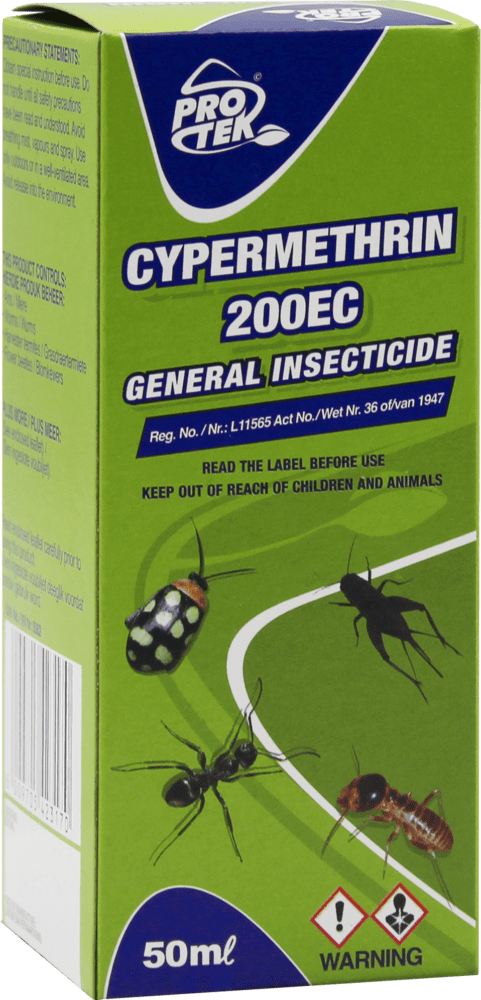 Protek Cypermethrin is a versatile contact and stomach insecticide for controlling a broad range of garden insect pests, including whiteflies. It works by disrupting the nervous system of susceptible insects, providing rapid control after contact or ingestion.
Cypermethrin is valued for its rapid action and broad-spectrum insect control, making it a useful option where pest populations are already active. It helps protect plants from a variety of damaging insects, and is widely used in both formal agricultural production and smaller-scale farming. For effective control, apply according to the registered label and ensure adequate coverage of the affected plant areas.
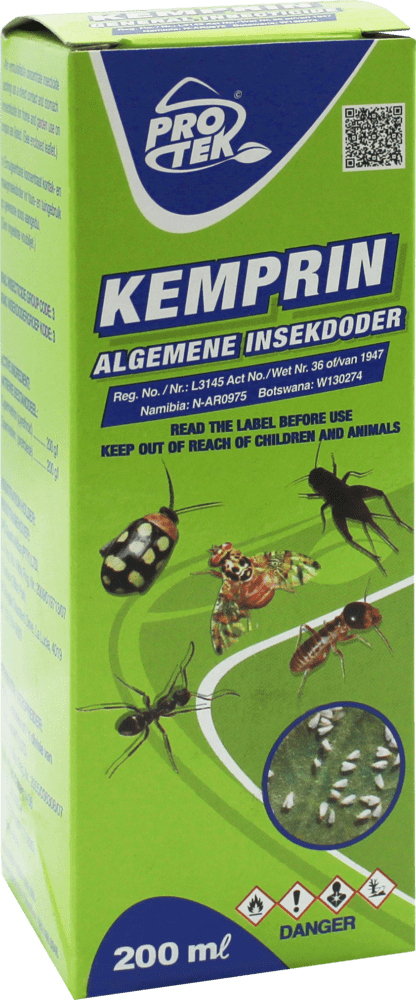
Protek Kemprin is a broad-spectrum insecticide designed to control a wide range of common garden pests, including whiteflies and many other damaging insects.
Kemprin works by disrupting the nervous systems of susceptible insects, causing death on contact or after ingestion. Its broad pest spectrum and rapid action make it a versatile product for managing mixed insect populations in the garden. Early treatment can help prevent pest numbers from building up and causing extensive plant damage. Always follow label instructions.
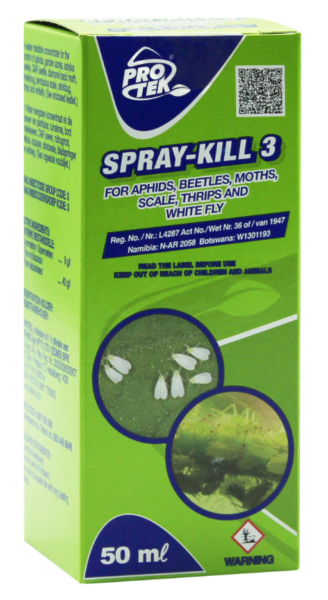 Protek Spraykill 3 is an effective contact insecticide for controlling a broad range of common garden pests, including whiteflies and other pests.
The formulation contains a synergist that enhances the insecticide’s effectiveness, enabling effective pest control at lower concentrations. This improves treatment efficiency while reducing the amount of active insecticide required. As a contact treatment, good spray coverage is
important, particularly on areas where pests are actively feeding. Apply at the first signs of pest activity and always follow the registered label instructions.
Top tips for effective whitefly control
For a healthier, more manageable garden, combine regular monitoring with good plant care and appropriate pest control:
- Act early: Treat whitefly infestations as soon as they are detected, before populations have time to build up.
- Check underneath the leaves: Whiteflies and their immature stages often hide where they are easily missed.
- Monitor regularly: Pay particular attention during warm weather, when whitefly populations can increase rapidly.
- Avoid excessive nitrogen: Over-fertilising can encourage overly lush growth that is more attractive to sap-feeding insects.
- Keep plants healthy: Adequate watering, balanced feeding and good growing conditions help plants withstand pest pressure.
- Remove badly affected leaves: Where practical, removing heavily infested foliage can help reduce pest numbers.
- Treat thoroughly: When using a contact insecticide, good coverage of affected plant surfaces is essential.
- Choose the right control method: Systemic products can be particularly useful where whiteflies are difficult to reach or where longer-lasting protection is required.
- Inspect after treatment: Continue checking plants after treatment and take further action if pest numbers begin to increase again.
- Follow the label: Always use the correct product, dosage and application method for the plant and pest being treated.
Keep your garden healthy
Whiteflies may be tiny, but they can quickly become a major problem if left unchecked. Regular inspections, balanced plant nutrition, sound garden practices and the appropriate use of insecticides can help keep populations under control.
Protek Tip: Make it a habit to inspect the undersides of leaves, especially in spring and summer. Early detection gives you a much better chance of controlling whiteflies before they spread and cause significant damage.
Registered in terms of Act 36 of 1947
READ THE LABEL BEFORE USING THE PRODUCT
Complete 350 SC: L7959, imidacloprid (chloro-nicotinyl) 350 g/l, WARNING, H302 – harmful if swallowed, H373 – may cause damage to organs (kidneys) through prolonged or repeated exposure via oral route, H400 – very toxic to aquatic life, H410 – very toxic to aquatic life with long lasting effects, registration holder: UPL South Africa (Pty) Ltd, company registration number: 2009/019713/07, 7 Sunbury Office Park, Off Douglas Saunders Drive, La Lucia, 4019, telephone number: 031 5145600
Cypermethrin 200EC: L11565, cypermethrin (pyrethroid) 200 g/l, WARNING, H227 – combustible liquid, H302 – harmful if swallowed, H315 – causes skin irritation, H317 – may cause and allergic skin reaction, H335 – may cause respiratory irritation, H410 – very toxic to aquatic life with long lasting effects, registration holder: PE-BEE Agri (Pty) Ltd, company registration number 2008/036308/07, PO Box 72, Heidelberg, 1438, telephone number: 011 812 9800
Garden Defender: L11562, imidacloprid (chloro-nicotinyl) 350 g/l, WARNING, H302 – harmful if swallowed, H373 – may cause damage to organs (kidneys) through prolonged or repeated exposure via oral route, H400 – very toxic to aquatic life, H410 – very toxic to aquatic life with long lasting effects, registration holder: Protek, a division of PE-BEE Agri (Pty) Ltd, company registration number: 2005/036 308/07, PO Box 72, Heidelberg, 1441, telephone number: 011 812 9800
Kemprin 200 EC, L3145, cypermethrin (pyrethroid) 200 g/l, DANGER, H226 – flammable liquid and vapour H332 – harmful if inhaled, H303 – may be harmful if swallowed, H313 – may be harmful in contact with skin, H340 – may cause genetic defects, H350 – may cause cancer, H335/H336 – may cause respiratory irritation or may cause drowsiness/dizziness, H304 – may be fatal if swallowed and enters airways, H373 – may cause damage to organs through prolonged or repeated exposure, H400 – very toxic to aquatic life, H410 – very toxic to aquatic life with long lasting effects, registration holder: UPL South Africa (Pty) Ltd, company registration number: 2009/019713/07, 7 Sunbury Office Park, Off Douglas Saunders Drive, La Lucia, 4019, telephone number: 031 514 5600
Spray-Kill 3: L4287, cypermethrin 8 g/l, piperonyl butoxide 40 g/l, WARNING, H302 – harmful if swallowed, H318 – causes serious eye damage, registration holder: PE-BEE Agri (Pty) Ltd, company registration number 2008/036308/07, PO Box 72, Heidelberg, 1441, telephone number: (011) 812 9800
Distributed by: Protek, a division of PE-BEE Agri (Pty) Ltd, PO Box 72, Heidelberg,1438, telephone number (011) 812-9800 or 0861 PROTEK (0861 77 68 35), www.protek.co.za